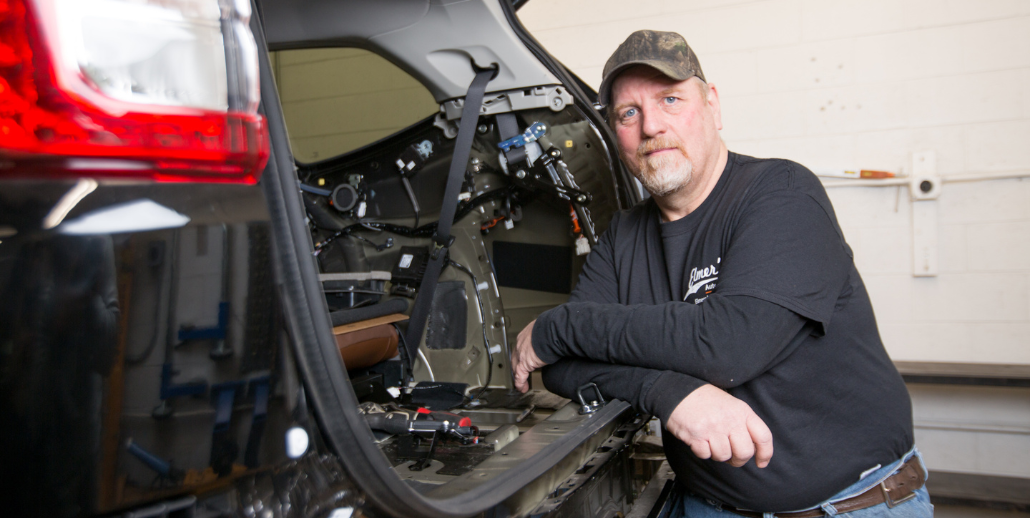
Front-End Collision Repair vs. Rear-End Collision Repair

Front-End Collision Repair vs. Rear-End Collision Repair

Automobile accidents are an unfortunate reality that comes with driving a car, and collisions can occur from different angles, such as the front or rear of a vehicle. Each type of collision presents unique challenges for repair technicians, as the impact points and damages differ significantly. In this blog post, we will explore the differences between front-end and rear-end collision repairs, highlighting their distinct characteristics, repair processes, and potential implications for vehicle owners.


Front-End Collision Repair

Front-end collisions typically occur when a vehicle collides head-on with an object or another vehicle. These accidents often result in substantial damage to the front of the vehicle, including the hood, bumper, grille, headlights, and engine components. The impact may also affect the suspension, frame, and alignment. Most commonly, drivers find that their vehicle’s entire driving system has been damaged, including the CV axles, drive shaft, and transaxle. Since these pieces cannot usually be straightened, they must be replaced.


Repairing a front-end collision involves a comprehensive assessment of the damage, often starting with a thorough inspection to identify structural issues. The repair process may include:


Disassembly

The damaged components are carefully removed to evaluate the extent of the damage and assess the underlying structures. Disassembly could be necessary because there may also be hidden damage from a front end collision that you may not be able to see at first, including (but not limited to); Transmission damage, engine damage, or even suspension or frame damage.


Structural Repairs

If the frame or core structures are compromised, specialized equipment is used to realign or replace damaged parts to restore the vehicle’s structural integrity.


Component Replacement

Damaged parts, such as the bumper, grille, hood, headlights, and radiator, may need to be replaced to ensure proper functionality and aesthetics.


Mechanical Repairs

The collision might affect mechanical components, such as the steering, suspension, or braking systems, which require a thorough inspection and repair.


Paint and Finishing

After all repairs are complete, the vehicle is primed, painted, and finished to match the original color and appearance.


Rear-End Collision Repair

Rear-end collisions usually occur when a vehicle is struck from behind by another vehicle. The damages in such accidents primarily affect the rear section of the vehicle, including the trunk, rear bumper, tail lights, and sometimes the rear frame.


The repair process for rear-end collisions typically involves:


Assessment and Disassembly

The damage is assessed, and the affected components, such as the rear bumper and trunk, are carefully removed to evaluate the underlying damage.


Structural Repairs

In severe cases, where the rear frame or other structural elements are damaged, repairs may be necessary to restore the vehicle’s integrity.


Component Replacement

Damaged parts like the rear bumper, tail lights, and trunk may require replacement to ensure proper functionality and aesthetic appeal.


Bodywork and Finishing

Skilled technicians meticulously repair and restore the damaged areas, preparing them for painting and finishing to match the original appearance.


Which Causes More Damage—Front-End or Rear-End Collisions?

Generally, front-end collisions tend to be more damaging (and deadly). Even head-on collisions done at lower speeds can end up totaling your vehicle. On the other hand, read-end collisions are usually caused by one moving car crashing into the rear of one at a stop light. Since the vehicle that has been hit is not moving, the force behind the moving vehicle is not as catastrophic.


That said, both collisions will cause problems, not matter how small the accident. The type of collision and the subsequent repairs can have various implications for vehicle owners, including:


  • Safety considerations: Both front-end and rear-end collisions can impact the safety systems of a vehicle. It is crucial to have all safety features, such as airbags and sensors, inspected and restored to their optimal condition.
  • Resale value: Properly repaired front-end or rear-end collisions can help maintain a vehicle’s resale value. However, inadequate repairs or visible signs of damage can significantly impact its market worth.
  • Insurance claims: Understanding the differences between front-end and rear-end collision repairs can help vehicle owners navigate insurance claims more effectively. Having a clear understanding of the damages and repair requirements can ensure accurate estimates and coverage.
  • Alignment and drivability: Front-end collisions can affect the alignment and drivability of a vehicle. Proper alignment and calibration are necessary to ensure smooth handling and prevent additional wear on tires and suspension components.


Choose Elmer’s Auto Body For Your Collision Repairs

When it comes to front end collision damage versus rear end collision damage, it is clear that both types of accidents require specific expertise and techniques to restore the vehicle to its pre-accident condition. Whether it’s the extensive damage to the front end caused by a head-on collision or the rear section affected by a rear-end collision, professional repair services are crucial to ensure safety, functionality, and aesthetics.


Elmer’s Auto Body has over 75 years of experience in repairing both front-end and rear-end collision damage. Our highly skilled technicians have the knowledge and expertise to handle your vehicle with careful precision. We also pride ourselves in being a certified collision repair center for many popular manufacturers, including Kia, Hyundai, and Tesla. By relying on Elmer’s, the best body shop in New Jersey, you can have peace of mind.


Furthermore, Elmer’s Auto Body understands the importance of safety and ensures that all safety systems and components are thoroughly inspected and restored to their optimal condition. Our team also prioritizes alignment and drivability, ensuring that vehicles handle smoothly and are safe to drive after repairs.

Let’s restore your vehicle to its former condition. Give us a call today or send us a message online to schedule your appointment.

What Gets Damaged In A Front End Collision?

What Gets Damaged In A Front End Collision?

Introduction

A front-end collision is just about the worst type of automobile accident, at least in terms of the risk to the people involved. These kinds of crashes are much more likely to result in serious injuries and fatalities, especially if one or both vehicles were traveling at a high speed. However, assuming that you are not seriously injured in an accident like this, your next priority will likely be to assess the damage done to your vehicle. So, what gets damaged in a front-end collision?

The Bumper

For the sake of simplicity, let’s start at the front of the car and work our way backwards. When you are hit from the front, your bumper will generally take the first and worst of the initial impact. Thankfully, bumpers are made to withstand impact damage, but only to a certain degree. In a serious collision, the bumper will certainly be bent and may even be snapped in two.

It should be noted that many newer vehicles have a “hidden” bumper. This means that you cannot directly see the bumper, as it is covered by the panels of the vehicle’s exterior body. However, these panels are just thin plastic, so don’t expect them to survive a collision. Even if your bumper survives the damage, the outer panels probably won’t.

The Front Grille, Headlights, Fan, And Radiator

Again, assuming that you are hit directly from the front, the other vehicle will most likely damage your front grille. It may also damage the front end of your vehicle’s body, depending on the exact angle of impact. Most serious collisions will also result in damage to one or both of your headlights.

So, whenever there is serious damage to the front grill, you need to think about the parts that are just behind that grill. This is usually be the radiator and the fan attached to it. They are two parts, but they work together, so one is right behind the other.

Most front-end collisions will cause damage to your vehicle’s radiator, simply because it’s located front-and-center. In some cases, the fan and radiator can even be crushed together so badly that they become one single piece. This isn’t as crazy as it sounds, because radiators are made of relatively soft aluminum, and radiator fans are made of thin steel or plastic.

Windshield And Hood Damage

Of course, the windshield and hood are also likely to be damaged in a front-end collision. A strong impact can easily send parts and debris flying, so windshields are frequent casualties. When you are involved in a front end car accident, car hoods don’t usually escape without damage either.

The Frame Of The Vehicle

Now we’re getting into serious damage territory. When your vehicle has suffered frame damage, it will often be impossible to fully repair the damage. However, if the frame is only slightly bent, it can probably be repaired. A skilled auto body technician can safely bend the offending piece back into shape and reinforce the spot for extra protection. If the frame of the vehicle is actually broken, or if it has been bent more than 45 degrees (that’s a diagonal angle, in case you’re wondering), the vehicle will be considered totaled.

No matter how much you like a particular vehicle, it isn’t worth the risk of driving around with a damaged frame. Such damage can throw your whole alignment out of whack, making it difficult to drive on a straight trajectory. Obviously, that can easily cause an accident. And, if it does cause an accident, your weakened frame will not give you the same protection that you had before. For these reasons, serious frame damage means that the car is done.

Engine And Transmission Damage

This kind of damage is almost as serious as frame damage. However, the difference here is the fact that an engine can be replaced. You can’t really replace a vehicle’s frame because it’s the most basic part of the vehicle. It is generally quite expensive to have your engine replaced, both in terms of parts and labor, but at least you have the option. A transmission (if ruined) is even more expensive to replace, but the vehicle cannot function without one, so there isn’t much choice if you want to save the car.

As we said earlier, there are times when the impact of a front-end collision will crush all the front-and-center parts together. This will include the fan and radiator, and most vehicles have parts in front of the engine such as alternators, starters, fuel pumps, and several belts to make everything run together.

If the impact is severe enough, all these forward parts can be shoved back into the engine itself. Since the engine will most likely be running when that happens, you can just imagine the damage that will occur. Now, understand that the transmission is connected to the engine, and you can figure out the rest.

The good news is that most minor collisions don’t require an engine replacement. Your engine is (usually) located in the front end of a vehicle, but it usually isn’t right in the front, so there are quite a few parts that can absorb the impact before it reaches your engine. It takes a pretty serious impact to permanently ruin your engine and/or transmission.

Conclusion

These are just some of the most common types of damage that you might see after a front-end collision. To find out the full extent of the damage, you will need to have the vehicle assessed by a qualified and certified body shop. But, you might be asking, “Where can I find the best auto body shop near me?” The answer is Elmer’s Auto Body. Whether you need front end collision repair or any other sort of bodywork, we take pride in giving every customer the care they deserve. To find out more, call Elmer’s Auto Body at (856) 218-0202.

The Real Difference Between Auto Body Repair Estimates

The Real Difference Between Auto Body Repair Estimates

Auto body repair is never really an enjoyable process, but it’s an inescapable part of life. As long as you drive, there will occasionally be a need to repair your vehicle. And, of course, such repairs can sometimes be expensive. After a collision or other accident, you will surely be thinking about the monetary damages, and that’s why it is important to get an accurate estimate from the repair shop. However, getting such an accurate estimate can be difficult. There are very real differences between different kinds of estimates, so let’s try to clear up this misunderstanding.

The Two Kinds Of Estimates

First off, you need to know that there are two basic types of car repair estimates: The quick kind and the thorough kind. The quick kind of estimate is normally done when your vehicle first arrives and is not intended to be authoritative. It’s just an initial assessment so that the shop can get an idea of what they will be repairing. This kind of estimate is usually done by visual inspection. In other words, someone will just walk around the car and look for any obvious problems.

A thorough estimate is something different entirely. First of all, this kind of assessment has to be done by a certified mechanic, as only they will have the knowledge to give an accurate estimate. Secondly, they won’t just look for obvious problems. Instead, they will look for all the problems that can be found. Needless to say, this sort of estimate takes a lot longer. However, it’s always going to be more accurate.

Understanding The Difference

When you get an initial cost estimate, you should understand that it won’t represent the final price. It’s a ballpark figure, so take it as such. Even if the initial assessment comes from a reliable source (like an adjuster from your insurance company), you should still take it with a grain of salt.

One reason for this lack of predictability comes from the repair shops themselves. Mechanics generally charge by the hour, and all of them will have different hourly rates. Your insurance adjuster certainly won’t have time to check the rates for every mechanic in the area, and a shop employee won’t have any reason to do that at all.

What Is A Supplemental Repair?

At some point, you might hear your mechanic or someone from the insurance company talking about the need for a supplemental repair. This term is kind of self-explanatory, as we are talking about extra repairs that need to be added after the initial assessment. When a repair shop determines that a vehicle requires more than the estimate could cover, they have to file a supplement claim with your insurance company.

While this claim is being processed, the repair job will (unfortunately) be put on hold. This is why collision repair can sometimes take a long time. The approval process can take anywhere from a few days to a week or more. It all depends on how fast your insurance company moves. In any case, supplemental repairs are one of the main things that can raise a repair bill beyond what was expected.

Should I Be Suspicious Of Cost Overruns?

If your repair bill turns out to be way higher than your initial estimate, you should probably be a little bit suspicious. However, don’t jump to conclusions because there is probably a good explanation. If you find yourself in this predicament, the best thing you can do is contact the shop directly and ask them to explain every part of the bill. There is no need to get rude or angry, just ask a lot of questions and get the information you need. They should be able to provide documentation for every repair. Also, in most cases, there will be no need to get too suspicious because everything will already have been investigated and approved by your insurance company.

Estimates Can Also Overestimate Your Damage

Obviously, not all vehicle damage can be detected visually. Other problems can be seen with the eye, but not until you remove one or more parts. When a quick initial estimate is done, the inspector will not be removing parts or anything of the sort. Instead, they will be taking guesses and making a cost estimate based on those guesses. If the inspector has overestimated the extent of the damage, those associated costs will not show up on the final bill. Thus, depending on the nature of your repair and the damage done, you might even end up with a bill that is lower than your initial estimate.

Call Elmer’s Auto Body Today!

Before you walk into a body shop for a repair estimate, it pays to know what you are doing. In this way, you will know what to expect and how to react. It is, of course, important to understand the difference between a quick estimate and a thorough estimate. A thorough estimate usually involves removing parts and checking many different things manually, which takes a lot longer than walking around the car and looking for signs of wear. In any case, you might now find yourself asking: “Where can I find the best auto body shop near me?” To answer that question, you need only call Elmer’s Auto Body at (856) 218-0202.

Unseen Damage Caused By Rear-End Collisions

Unseen Damage Caused By Rear-End Collisions

Most of us have had the experience of being rear-ended in traffic. Since these are usually just minor bumps, people sometimes tend to dismiss these accidents without reporting them. This is especially true if there is no visible damage to either vehicle. However, a lack of visible damage does not rule out the possibility of hidden damage. Not all problems are easy to see, so never just assume that your car is fine after a collision. Let’s talk about the most common types of hidden damage.

1. Frame Damage

This one is obviously the most dangerous possibility. A car with a bent or broken frame is absolutely unsafe to drive. Not only does it provide much less protection against impact, but it can also throw your entire vehicle out of alignment. If you thought it was bad having a wheel or two out of alignment, imagine what happens when the whole car is warped!

When your vehicle has a damaged frame, it might even start swerving to one side. If this happens at the wrong time, it can throw you right into the other lane and right into the path of another vehicle. The worst part of all? You will have no ability to correct the situation. The only thing you can do is throw the steering wheel hard to the opposite side, which may or may not be effective. Needless to say, it’s better to just get the frame repaired or replace the vehicle.

2. Transmission Damage

Many vehicles have their transmission in the rear, or they have transmission components in the rear. Together with the frame and the engine, your transmission is one of the three most important parts of your vehicle. Your transmission uses a series of gears and chains (similar to bicycle chains) to move your car in and out of the various gears. This requires specific timing and adjustment, and a collision can easily throw that timing out of whack.

Also, if any part of the transmission system is damaged, it will likely leak transmission fluid. Without that, your transmission will not work properly and may even be ruined. When you start working all those chains and cogs with no lubrication, all that metal grinding on metal can be disastrous.

3. Hidden Fender Damage

You surely know that all vehicles have front and rear fenders, but think about this: Are they always visible? The answer is no, many modern vehicles have fenders that are hidden by panels of steel or plastic. This is done mainly for cosmetic reasons, but it does have one negative side effect: It is harder to tell when your bumper has been damaged.

A damaged fender is no joke. When a collision occurs, the front or rear fender is usually the first part to take the impact. There’s a reason why they call these things “bumpers.” So, since these chunks of steel are your first line of defense, you need to make sure that they are strong at all times. For this reason, you should always get your vehicle checked out by a certified auto body shop after a collision.

4. Electrical Problems

A minor rear-end collision can also cause problems with your vehicle’s electrical system. There is a complex network of electronic components in every modern vehicle, consisting of wires, relays, fuses, switches, and various other things. If one of these components should become detached, all sorts of problems can occur. Your electrical system powers door locks, tail lights (and all other lights), turn signals, AC, stereo, etc.

The vehicle’s electricity comes from the battery, which is charged by the alternator, which is run by a belt pulley from the engine. Alternators and batteries are usually located in the front of the vehicle, but some designers have put these components in the rear. You’ve probably known at least one person whose car battery was located in the trunk. Even in a minor collision with no visible damage, those electrical components can easily be damaged or detached.

5. Suspension Problems

When we talk about your car’s suspension system, we are mainly talking about the shocks. These are large spring-loaded rods that allow your vehicle to bounce on its wheels to some extent. This makes for a much smoother ride, and it also maximizes the friction between your tires and the road. By suspending all of the vehicle’s weight over the tires, the suspension system puts all that weight and pressure right where it needs to be. This makes your vehicle less likely to slide or slip when driving on wet/icy roads.

Naturally, a rear collision can easily cause damage to the rear wheels. If the suspension system connected to those wheels is damaged, you may not notice the effects until much later. In particular, you will probably notice that kind of damage when you hit a bump in the road or when you drive on wet/icy roads.

Conclusion

After a collision, you need to take action immediately. You’ll want to exchange information with the other driver and with any witnesses, and you’ll need to call the police and your insurance company. Once all that is done, however, your next job will be finding a good body shop in your area. Only a qualified professional can verify that your vehicle is still safe to drive. So, if you’re at that stage, you might be wondering: “Where can I find the best auto body shop near me?” To answer that question, just give us a call at (856) 218-0202.

A Beginner’s Guide to Car Dents: Everything You Need to Know

A Beginner’s Guide to Car Dents: Everything You Need to Know

Everyone has seen or experienced a dent. It’s just an impact that causes the metal to be pushed inward, which is both unsightly and potentially unsafe. However, it never hurts to learn a little bit more. So, let’s talk about car dents. More specifically: What are they, what causes them, and how they are repaired?

What Is A Dent?

Obviously, a dent exists when a particular surface has been caved inward. This is most often the result of an impact, and it doesn’t always take a large impact. You probably know all this, but here’s the important part: Knowing when a dent is truly a dent. Sometimes, a light impact (like a hailstorm) can damage the paint without actually denting the underlying metal. When this happens, you just need a new paint job. If this happens, you can count yourself among the lucky ones.

When the metal of your vehicle has been dented, but only to the tiniest degree, that is usually called a ding. A ding is obviously much easier to repair, and will certainly be cheaper to repair as well. When you truly have a dent in your vehicle, it will be pretty obvious because they are always larger than dings or spots of damaged paint.

Most Common Causes Of Dents

A lot of things can hit your vehicle while it’s out in the world, and it can even happen in your driveway at home. For instance, falling sticks and limbs from nearby trees can potentially cause a dent (or at least some ugly scratches). Impact with another vehicle will usually cause a large dent at the point of impact. Believe it or not, shopping carts are also one of the most common causes of denting. Although shopping carts don’t travel at a very high speed, they are made of steel and can build up some serious momentum on a downhill grade. We already mentioned hail, and that isn’t the only weather hazard, either.

Golf balls, baseballs, and other flying objects also frequently cause vehicle dents. Depending on where you live, this might be an everyday hazard. Finally, there is also the potential hazard of wildlife on the road. Hitting a large animal such as a deer or a vulture can cause major damage, and even hitting a small animal can cause minor damage or throw you off course and cause an accident.

How Dents Are Repaired

Now let’s focus on the positive part: How do you repair these issues? There are several methods, so we will discuss those that are most frequently used. However, the first thing you need to consider is whether or not you can employ paintless dent repair (PDR) techniques. Normally, repairing a dent requires that you repaint the damaged area. However, there are methods that allow a trained technician to remove dents while preserving the paint layer.

So, what’s the catch? Well, there’s only one: PDR only works for small to medium-sized dents. If you are dealing with a large dent, the paint will have already been damaged by the impact. As such, it cannot be saved no matter how skilled the technician might be. However, the majority of dents tend to be small enough for PDR to work. If your vehicle is dented in a serious way, you’ll probably need to replace the entire part anyway.

Dent Removal Techniques

There are a great many techniques that can be used to remove dents and dings. Sometimes, a special glue can be used. They apply the glue to the dented area, which allows a special tool to grip the glue and pull the dent outward. This is an older method, but it works quite well. In fact, it is probably the most common way to remove small dings.

For larger dents, things like that won’t do the trick. Instead, they have to use another special tool to hit the part from the inside, denting it in the opposite direction. Once that is done, any excess metal is trimmed away. This technique is sometimes called “knockdown.” Sometimes, this kind of thing can be done without hitting or tapping the metal. If the metal is flexible enough, pressure alone might be used. There are even some technicians who use a magnetic induction technique which involves heating the metal and then using a magnetic field to warp it in the right direction and assist in its removal.

Can Dented Plastic Be Repaired?

No vehicle today is made exclusively from steel. They all have at least some plastic parts, and this may include outer parts that are prone to denting and other impact damage. If you are dealing with a dented plastic panel or something of that sort, it can probably be repaired. They simply heat the dented area and use a suction puller to slowly remove the dent. As long as the plastic hasn’t been cracked or broken in any way, dented plastic parts can be repaired.

Conclusion

Although it is sometimes possible to repair a dent on your own, it really is better to trust trained experts. Besides, this kind of thing requires special tools that most people do not have. If you find yourself asking “where can I find a good and affordable auto body shop near me?”, we have the answer. Elmer’s Auto Body has been in the business for 75 years, and we always deliver the best in service and quality. To find out more, call us at (856) 218-0202.

The Future Of Auto Body Repair: Technology And Innovation

The Future Of Auto Body Repair: Technology And Innovation

The automotive industry in the last few years has witnessed a dramatic transformation. Still, we could hardly call it a surprise seeing all the new technologies like self-driving cars and electric cars rolling out. Less than a decade ago, those same technologies enjoyed far less popularity, and the general awareness of them was a shrug of the shoulders. To better understand the current landscape of auto body repair, let’s look at the new technology and innovation coming soon.


Future Auto Body Repair

In the future, collision repair will depend on professionals in the business to improve the lifespan of car parts. We need this improved lifespan to advance and create new opportunities. Collision repair professionals will continue to innovate. This innovation will let customers save more money. In doing this, they can own some of the newer and more technologically advanced vehicles.

What Does "Certified Auto Body Repair" Mean?

What Can We Expect for Changes?

Right now, the auto body repair industry struggles with the quality of key vehicle part repairs. Car owners will continue to seek more cost-effective solutions and look for ways to make the repairs last longer. Collision repair professionals who can meet this demand with open arms will excel in business. They will seek new ways to offer new products to customers and improve existing products.

Efficiency will continue to grow in importance if we wish to compete with our rivals. Collision repair professionals will need to make repairs in a timely fashion, and they will need to keep offering them at increasingly affordable prices, even if the price increases in other ways.


Newly Emerging Auto Body Techniques

New technology in this industry will continue to evolve, and one of the specific areas where we might see change relates to the use of aluminum in car design. In the past, only high-end supercars and performance cars would receive aluminum body panels. Rumors are already circulating that Ford plans to design all-new aluminum-bodied vehicles. The reasons behind it include the lightweight material lending itself well to better fuel economy and better ability to meet safety standards.

This shift will mean a change because most technicians only know how to work on steel cars. You can’t reshape a banged-up aluminum body in the same way as a steel car. You need welding equipment and aluminum riveting tools. That will mean that auto body repairs will cost more for some vehicles, but will receive a stronger car that lasts longer.

How to Choose The Right Auto Body Shop

Augmented Reality: How Will That Work?

Believe it or not, augmented reality will play a new role in the auto body shop. Google, “auto body shop near me,” and many of the ones that you see right now may change their strategy to include augmented reality. You might, for example, see auto body professionals put on Google Glass headsets to feed them visual information about the car. Volkswagen became the first automaker to float the possibility of this technology to people.

New cars have complicated and dangerous features like electronic and hybrid drivetrains. This augmented reality will save technicians the amount of time spent learning how new vehicles work, and it will make it safer for them to make the repairs.


3D Printing: Untapped Potential

In the 3D printing realm, we see a great deal of untapped potential. We can, for example, use 3D printers and computers to recreate objects. Especially with older cars where finding the parts can be notoriously difficult, this will make it easier. Just take out the one you broke, scan it and it will spit out a new auto part.

Right now, 3D printers remain out of reach for most people, but as technology advances, they will become more affordable. The difficulty of using a 3D printer will become less complicated in the future as well.

This isn’t a stretch either considering how automakers already use 3D printers to create prototypes. Insurance companies have sought ways to recreate classic cars. Still, the stakes with this will need to prove fail-safe. Imagine the high stakes when you 3D print a set of brake calipers.


Onboard Communication Systems

Most of us have heard about GM OnStar at one point or another, which has existed for over 25 years. When you activate it, it interacts verbally with you. It can offer you turn-by-turn directions and assistance in the event of a car accident. In the future, we may see an increasing number of companies offering similar technologies.

Most, if not all automakers, in the future, will likely offer similar services with their own insurance products. AI, in the same way, that it revolutionizes other industries, will revolutionize auto technology as well. We will likely see new standards rolling out as the technology comes out. While we can choose to resist the changes, it will allow us to compete better if we adopt them.

All of this happening has already begun, and the tidal wave is coming for us even now. We will need to adapt and change at an increasing rate as this technology rolls out.


Conclusion

If you’d like to speak more about the future of auto technology, feel free to contact Elmer’s Auto Body. We have run our family-owned and operated business in South Jersey for over 70 years. With that amount of experience, we have seen where auto body repair started and where it may end up. No one knows the future for sure, but this does give us some idea of where it may be headed. Call us today at (856) 218-0202.