
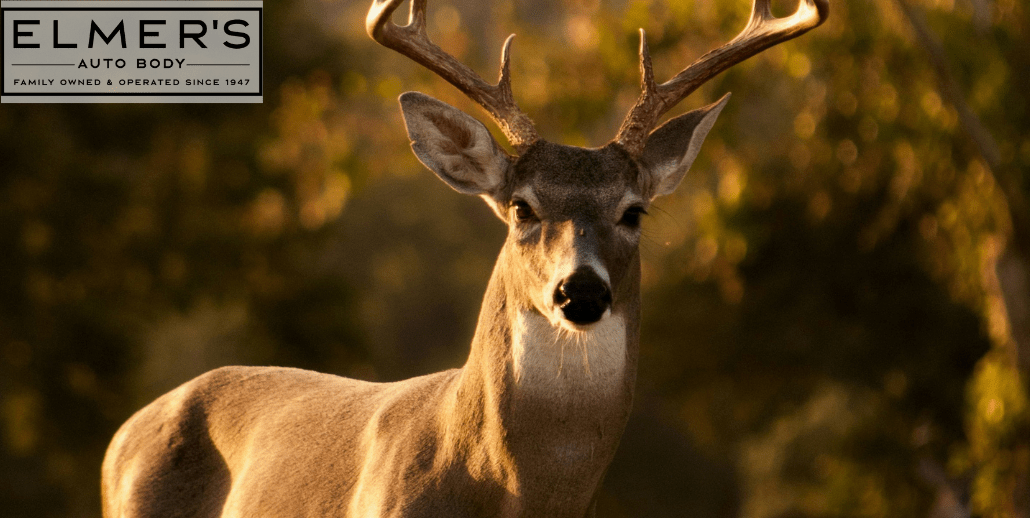
As summer shifts to autumn, there is an uptick of deer fatalities along South Jersey roadways. Between September through mid-December, deer begin to move in preparation for the rutting season, which happens in the middle of autumn as temperatures cool. Since many drivers commute in the dark when deer are most active, there is a heightened chance of getting into a collision with a deer. In fact, 2.1 million deer-related vehicle collisions happen annually in the US. When that happens, drivers are often faced with a surprisingly high repair bill. Why does this happen and what can be done to avoid deer collisions in South Jersey?
Here’s what you need to know.
Key Takeaways
- Deer collisions often cause hidden damage beyond visible dents, including structural, suspension, cooling system, and ADAS sensor damage.
- Modern vehicles are more expensive to repair after deer strikes because advanced safety technology, cameras, and sensors may require replacement and recalibration.
- Even if your vehicle appears drivable, a professional collision inspection is important to identify hidden damage that could affect safety and performance.
- Drivers can reduce their risk by slowing down in deer-prone areas, using high beams when appropriate, staying alert during dawn and dusk, and avoiding sudden swerving.
- Choosing a certified collision repair center that follows OEM repair procedures helps ensure hidden damage is properly identified and your vehicle is safely restored.
What Damages May Occur If You Hit a Deer With Your Car?
Hitting a deer can cause a wide variety of damages to a vehicle that extend beyond a damaged panel or dented bumper. On average, a whitetail deer can weigh between 100-150 pounds, depending on the season and their age, with some larger bucks weighing closer to 300 pounds. Hitting a deer at any speed is going to cause a massive force transference, leading to widespread damage that may not even be noticeable until a professional inspects your vehicle.
The most common damages include:
- Front bumper damage: Cracked or broken bumper covers, damaged impact absorbers, and bent reinforcements.
- Hood and grille damage: Deer may roll onto the hood after impact, causing buckling, dents, and latch damage.
- Headlights: Frontal impact may break headlight covers and the bulbs within.
- Windshield: Should a deer be lifted onto the hood, there is also a chance if it continuing to move up, striking and shattering the windshield.
- Suspension and steering: A severe impact can bend control arms, tie rods, and even affect wheel alignment.
- Radiator and cooling system: Deer collisions commonly puncture radiators, condensers, and cooling fans. Systems can easily leak coolant and overheat after an accident.
- Structural damage: Even if the exterior damage is not severe, force transference may affect the frame rails and other structural components.
- ADAS sensors: Modern vehicles have cameras and sensors that can be broken or misaligned.
In collisions at a higher speed, airbags may also deploy, which can cause injuries to the driver, as well.
How Much Could the Damages Cost in NJ?
In 2024, it was reported by the Insurance Agency at AAA that New Jersey policyholders had the average claim of $7,347, which was a 9.5% increase from 2023. In 2025 and 2026, that price climbed even higher. This spike in repair costs for deer collisions is partially attributed to the complexity of modern vehicle repair.
Imagine striking a deer. The animal hits the front bumper then is sent onto the hood, coming to a stop on the windshield, which shatters. On average, a windshield replacement alone may cost $300-$500, depending on the vehicle. Then the hood, bumper, side panels, and all the tiny attachments underneath may need to be replaced. If you own a modern vehicle with ADAS, the adjustment or replacement of the cameras and sensors, it can cost between $300 and $1,600. A windshield camera sensor, for example, may be between $500 and $1,300.
In short, it becomes more important than ever to be a vigilant driver.
How to Prevent a Deer Collision
The best defense against a deer collision is awareness. Here are some tips to help you drive more safely and avoid an expensive deer-related accident in South Jersey:
- Keep your eyes moving back and forth along the road. Look for signs of animals, particularly in areas with limited visibility.
- Be attentive during specific hours—5:00-8:00 am and pm.
- If you know deer are in the area, reduce your speed. This applies to areas with golf courses, streams, and fields.
- Use high beams at night when there is no oncoming traffic to see if light reflects off an animal’s eyes.
- Watch for other deer if one does dart in front of you. Deer travel in herds.
- Always wear a seatbelt.
- Do not swerve. Swerving may confuse the deer and cause them to run back into the path of your vehicle. It can also frighten other drivers.
Collision Repair Done Right at Elmer’s Auto Body of South Jersey
With the cost of collision repair rising and the season changing, it is important to be informed about deer collisions in South Jersey. Hopefully, you’ll be able to avoid such an accident. If you do find yourself with deer-related damages to your vehicle, look for an auto body repair shop with experience, one like Elmer’s Auto Body of South Jersey.
Our certified collision repair center is well-versed in deer-related damages, and we have the technology and skills to get your car back on the road.
Auto Body Repair in South Jersey Done Right
Since 1947, Elmer’s Auto Body has been serving the South Jersey community. If you recently struck a deer and need repairs, we’ve got your back. Give us a call at one of our three convenient locations:
Mt. Ephraim: (856) 456-7018 |
Sewell: (856) 218-0202 |
Medford: (609) 714-4050